A Press Release, a Transcript or a Witness Account?
Learn what a press release, transcript or witness account can establish, what each leaves out and how to match the source to the question you need answered.
The common mistake in source checking is asking one document to answer a question it was never built to answer. A press release, a transcript or a witness account can each clarify a regional story, but treating them as interchangeable can turn an agency’s claim into a verified fact—or a vivid recollection into a full account.
Start by naming the thing you need to know. Are you checking what an office says it did, what someone said in a public meeting, or what a person recalls seeing? Then choose the source that can actually bear on that question, and mark the gaps it cannot fill.
Why does the source seem to say more than it does?
Documents often arrive with an aura of authority. A release has an organization’s name at the top; a transcript looks like a complete record; a witness account may describe a scene in sharp detail. Those features tell you something about the source’s form, not whether every claim in it is established.
First, separate the source’s direct contents from what you infer. “The county says it closed the road” reports a statement. It does not, by itself, establish when the closure began, which stretch was affected or whether drivers could still pass through an access point.
Next, identify the question at the right scale. A transcript may settle the words spoken at a council meeting while saying little about what happened on a nearby street afterward. A witness may speak clearly about a blocked driveway but not know which agency ordered the blockage.
- Write the claim you need to check in one sentence.
- Mark whether it concerns an announcement, a spoken statement, an observed event or a cause.
- Choose the source closest to that kind of claim.
- Keep any missing details visible instead of filling them in from context.
What can a press release establish?
A press release is useful evidence of what an issuing organization publicly says, announces or wants readers to know. A county notice can establish that the county announced a road closure; a utility statement can identify the service interruption the company says it is addressing. The release’s date, named office and exact wording help define the claim.
Its limits come from its purpose. The organization selects the details, terminology and emphasis. A release may describe a “temporary access change” without naming the affected entrances, or report that crews are “responding” without saying what work is complete. Those phrases are not necessarily misleading, but they do not answer every practical question.
Check the issuing body and the scope of its authority. A sheriff’s office can speak for its own actions; it may not be the best source for a school district’s reopening decision. Also distinguish an announced plan from an accomplished event: “will reopen” is not the same claim as “has reopened.”
Use a release to establish the organization’s position, announcement or stated action. For independently observable details—such as which road segment is blocked—look for a source that directly records or observes that detail.
What can a transcript establish?
A transcript can help establish what a speaker said in a recorded or transcribed setting, especially when the wording matters. It can show that a council member proposed a motion, that an agency representative described a project, or that a resident raised a concern during public comment.
But “transcript” does not always mean a complete, word-for-word account. A meeting record may omit side conversations, identify speakers imperfectly, or capture only the formal portion of a gathering. An automatic transcript can mishear names, place names and technical terms. If the recording is available, compare the relevant passage with the audio, while remembering that audio itself may be hard to hear.
Context matters, too. A sentence pulled from a long exchange may sound like a decision when it was a question, a proposal or a speaker’s description of someone else’s view. Check who is speaking, what prompt they are responding to, and whether a motion or vote follows.
Use a transcript to verify words and sequence in the setting it records. Do not treat it as proof that a speaker’s description of events outside that setting is accurate.
What can a witness account establish?
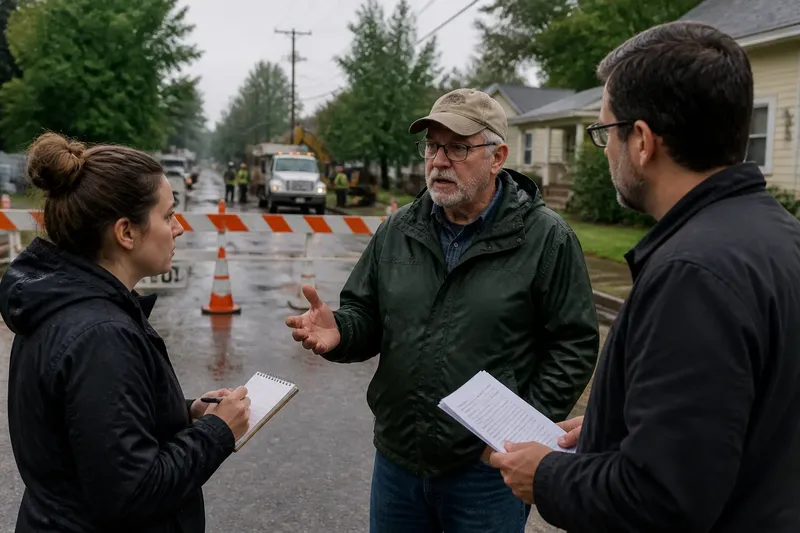
A witness account can provide detail about what a person says they saw, heard or experienced. It may identify a blocked entrance, describe the order in which vehicles arrived, or explain how an event affected a particular household. That perspective can reveal details missing from an official announcement.
The account remains bounded by the witness’s position, attention and memory. Someone watching from a porch may see one part of a street but not the intersection beyond it. A person may recall the sequence clearly while being unsure of the time or which agency vehicle arrived first. Specificity is valuable, but it does not erase those limits.
Ask what the person had a direct opportunity to observe. Separate firsthand details from interpretation: “I heard a loud impact” differs from “the impact came from the construction site.” Ask how the person knows the latter, without implying that uncertainty makes the whole account worthless.
Use witness accounts to describe a person’s reported experience and to identify details worth checking. Attribute the account plainly, and avoid expanding one person’s view into a claim about an entire neighborhood.
How should you match each source to the question?
Can a press release confirm what an agency announced?
Yes: it is direct evidence of the announcement as issued, including its wording and stated scope. It does not independently confirm that every described action occurred as planned.
Can a transcript confirm what a speaker said?
It can support that claim within the setting and record it covers. Check the surrounding exchange and, where possible, the audio before quoting wording that may depend on tone or a disputed transcription.
Can a witness account confirm what happened on the ground?
It can support what that witness says they personally observed or experienced. The account may not establish cause, a wider pattern or details outside the person’s view.
What if the sources appear to conflict?
First compare the exact claims, time frames and locations; one source may describe an announcement while another describes what a person saw later. If the claims still conflict, preserve the disagreement and seek a source suited to the disputed detail rather than choosing the most confident voice.
What usually goes wrong when sources are combined?
A frequent problem is letting one form lend authority to another. A release may quote a witness, or a transcript may include an official’s account of an event. The quotation is still a witness’s statement or an official’s statement; its appearance inside a formal document does not independently verify it.
Another problem is blurring attribution during a rewrite. “The town says the bridge is safe” can become “the bridge is safe,” quietly converting an attributed claim into the writer’s own. Keep the speaker attached to claims whose truth has not been independently established.
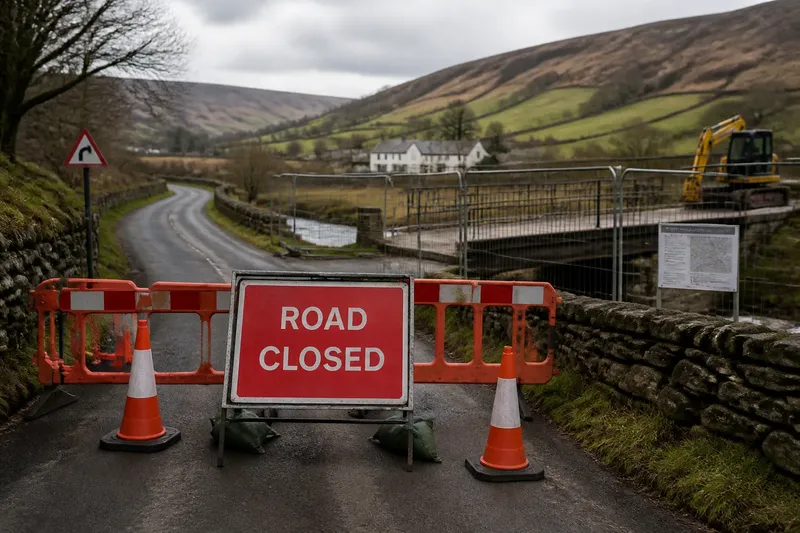
Say you are covering a fictional county meeting about a closed riverside road. A county release says the road is closed for drainage work, a transcript records a public works director saying crews expect to clear one entrance, and a resident reports that a second entrance remains blocked. Treat the release as the county’s stated reason, the transcript as evidence of what the director said, and the resident’s account as a report about that entrance. Before describing the second entrance as blocked, seek a direct view or another account; until then, attribute the observation and leave the broader closure status open.
When details depend on a document’s official status or a recording’s terms of access, follow the issuing body’s instructions and applicable local rules.
How can you keep the story precise without making it unreadable?
Use verbs that match the evidence: “announced,” “said,” “recorded,” “described” and “reported” tell readers where a claim comes from. Reserve unqualified statements for details the available evidence supports directly. A sentence can be clear without pretending that one source settles every part of the story.
Keep a small source note as you work: the claim, who or what supports it, the source’s limits and the next check needed. This is especially useful when updates arrive at different times. A newer release may revise an agency’s account without changing what a witness reported earlier.
The practical test is simple: could a reader tell whether a sentence reports an announcement, a recorded statement or an observed experience? If not, sharpen the attribution or narrow the claim. Matching a press release, transcript or witness account to its proper question makes a regional story more precise—and gives its unanswered questions a clear boundary.